An investment in great teaching does more than help students graduate. It helps them build the skills, confidence, and workforce readiness that give their college degree lasting value.
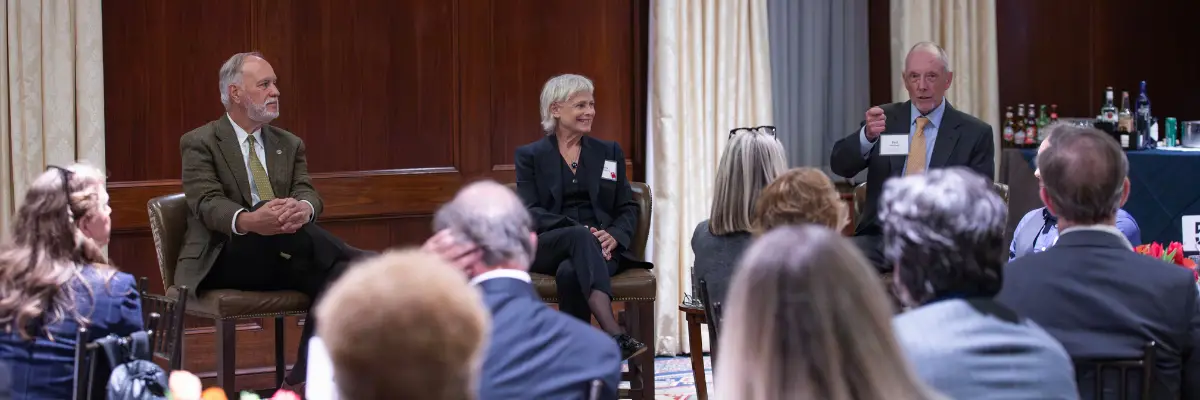
This week, ACUE brought together 40 college and university presidents and provosts in New York City for a candid conversation about the most significant driver of student success: great teaching. Ted Mitchell, president of the American Council on Education (ACE), argued that the quality of undergraduate education and the quality of teaching are the pathways to regaining public trust in higher education. CUNY Chancellor Félix V. Matos Rodríguez emphasized the importance of ensuring students are workforce ready, recognizing that faculty want to be involved in this effort. He discussed an idea that he has shared with faculty about intentionality and how analyzing their activities and assignments to determine how the intended learning might be relevant for the workplace can be very motivating for students. What struck me most, moderating the conversation, was how quickly it moved from whether great teaching matters to how much it matters. There was a strong, shared sentiment among many of the leaders in the room that perhaps nothing matters more.
So, is a college degree worth it?
The public’s questions about higher education have changed. They’re no longer only asking whether college is affordable or whether students finish. They’re asking something more pointed: What do graduates actually have outside of a diploma and loans awaiting payment? What makes them more prepared for the world of work than someone who never attended college?
When I listen to these questions, I hear an underlying one: What have our students learned?
That tells me something important. Graduating more students, as essential as that is, may not be enough to regain the public’s trust. We also have to show that our graduates leave with something real. That’s why I agree so strongly with Chancellor Matos Rodríguez that helping faculty teach with intentionality matters—so that students understand how their learning connects to their professional endeavors.

So, let’s name the goal plainly: to graduate more workforce-ready students from our undergraduate programs.
We don’t have to guess at what it means to be workforce ready. For more than a decade, the National Association of Colleges and Employers has researched this question, and today it identifies eight career readiness competencies: career and self-development, communication, critical thinking, teamwork, leadership, professionalism, technology, and equity and inclusion. Given the workforce our students are entering, using AI effectively and responsibly is critical for students to achieve the technology competency.
While many of us instinctively look to offices of career services to help us meet workforce-readiness goals, there are two problems with this approach. The first is the math: A typical career services professional serves somewhere between 1 and 3,000 students. The second is the competencies themselves. Only one—career and self-development—sits squarely within the expertise of career services. The rest are complex skills that people learn through repeated, feedback-rich practice. There is only one place in a student’s college experience where that kind of sustained practice happens: the classroom.
We have both a challenge and an opportunity in front of us when it comes to faculty supporting the development of students’ workforce readiness. Not all faculty have been prepared in how to teach well, understandably leading many to teach the way they were taught: through lecture. But the competencies that employers expect graduates to have are nearly impossible to cultivate through lecture. They’re capacities students must build, again, through practice and feedback.
Take teamwork. Faculty believe they’re teaching teamwork skills when they assign a group project. They form groups, assign a deliverable, and grade the deliverable. Often the one or two students who care most about their grades do the majority (or all) of the work, conflict goes unaddressed, and both faculty and students come to dislike group projects. We’ve all seen or experienced it. But it doesn’t have to be this way. There are research-backed practices that solve these exact challenges. The practices aren’t obvious or intuitive, but they can be learned.
While many of us instinctively look to offices of career services to help us meet workforce-readiness goals, there are two problems with this approach. The first is the math: A typical career services professional serves somewhere between 1 and 3,000 students. The second is the competencies themselves. Only one—career and self-development—sits squarely within the expertise of career services. The rest are complex skills that people learn through repeated, feedback-rich practice. There is only one place in a student’s college experience where that kind of sustained practice happens: the classroom.
Since the 1980s, researchers in cognitive psychology and the learning sciences have produced a large, replicated body of evidence about how people learn and which teaching practices align with it. Yet we ask faculty to acquire this knowledge by attending an assortment of workshops and conferences—picking up individual practices like pieces of a jigsaw puzzle, each disconnected from the others. Practices learned that way are hard to remember and harder to use when the instructional moment calls for them. When faculty learn evidence-based practices within a coherent framework, they understand not just what to do, but how, why, and when. That is how good practices become good teaching.
We don’t ask students to build expertise from a collection of disconnected “tips and tricks.” We instead design curricula to scaffold learning, with assignments and activities building on one another and preparing students to meet our course objectives. Our faculty deserve the same.

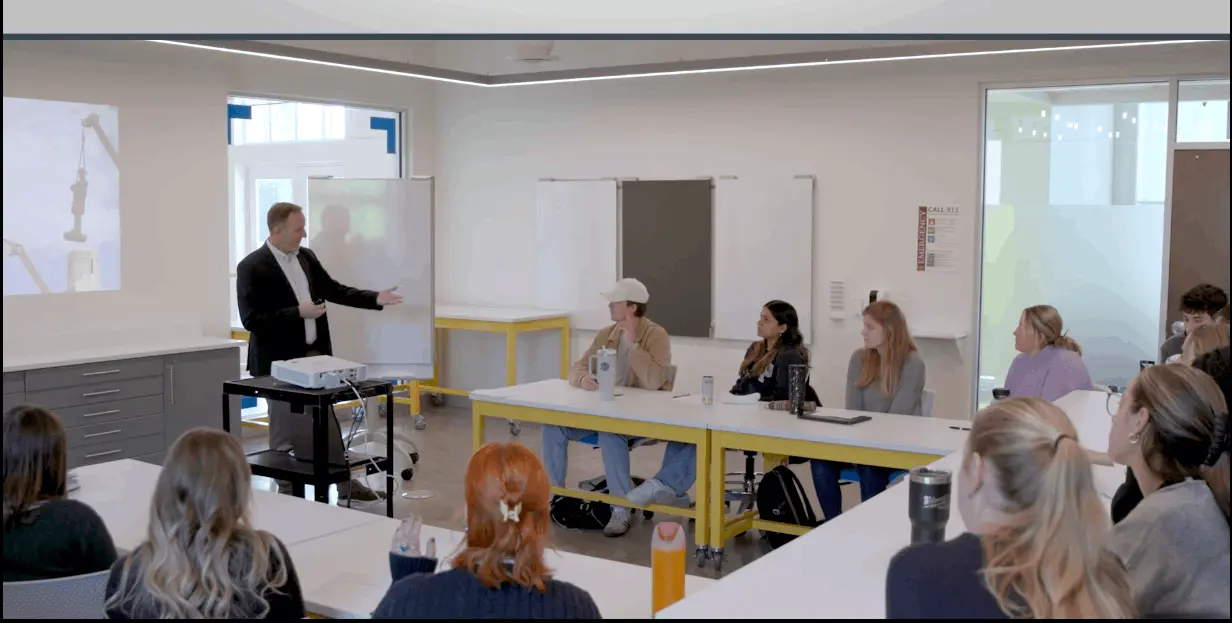
Let me paint a picture of what this looks like in practice, especially for the student who wonders whether she belongs in college, or the one juggling a job and family alongside her classes. Before the semester starts, she receives a welcome video from her instructor: a little about who he is, what the student will learn, and his genuine excitement to teach the course. On the first day, she does a syllabus scavenger hunt with a partner to identify some of the most important points. All semester, she is reminded about what she’s learning and why, how she’ll be assessed, and how every activity and assignment prepares her to succeed. She believes she can, in fact, succeed because the instructor communicates confidence in her abilities. When her instructor asks a question, he waits, giving her time to think. He tells her that mistakes are simply opportunities to learn and adopt different approaches. He explains why rereading notes isn’t a productive way to study, and why testing herself is. This is where the magic happens in undergraduate education. Imagine it happening for every student, in every class, with every instructor across our colleges and universities.
Students taught this way feel that their instructors care about them. When they have enough of those instructors, they conclude that their institution cares about them. They come to believe they belong. And when students believe they belong, they stay, work harder, learn more, and graduate ready for the workforce.
That is how we answer the public’s question—not only with more diplomas, but diplomas of value and graduates who can show what they’ve learned.